
Opinion · 2026-11-17 10:36:00 · By Sabas Jun Capili
Coles cyber incident renews focus on Australia’s small business security
Coles is investigating a cyber security incident with Australian government assistance and says it has found no evidence so far of data compromise. The case renews debate about affordable cyber protection for smaller businesses.
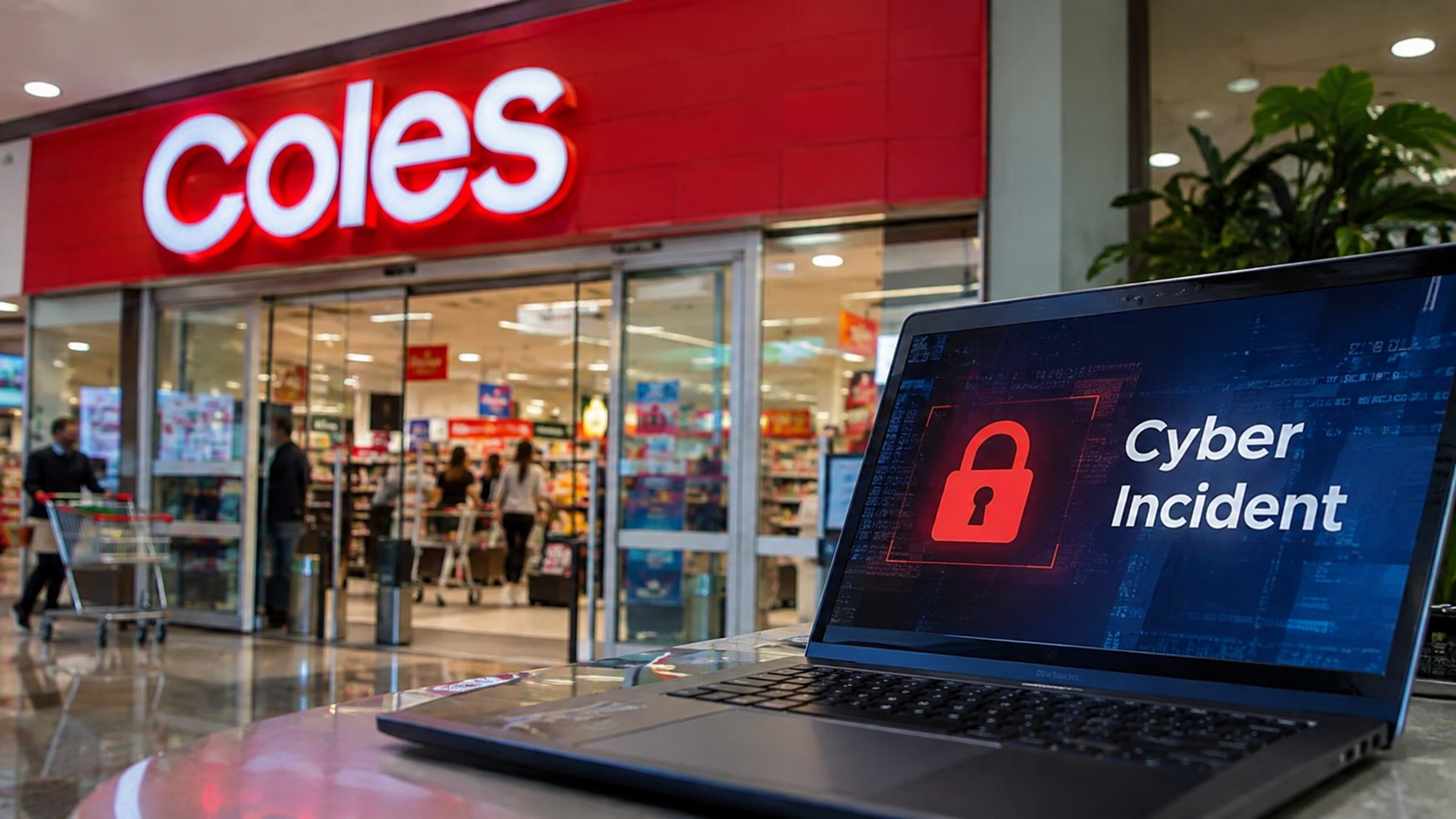
Coles Group is investigating a cyber security incident with assistance from the Australian Cyber Security Centre, as the disclosure renews questions about how well Australian businesses of all sizes are equipped to withstand digital threats.
In an announcement to the Australian Securities Exchange on 16 November 2026, the supermarket group said its investigation had not identified evidence that customer, employee or supplier data had been compromised or removed from its systems. That is a preliminary assessment, not confirmation that a data breach has been definitively ruled out.
Coles said it was working with international cyber security specialists to contain the incident and secure its information technology environment. The retailer said customers could continue shopping normally in stores and online, and that it would provide further updates as appropriate.
The company did not disclose the nature of the incident, when it began, which systems were involved or who might be responsible. There is no verified basis to attribute the incident to artificial intelligence or any particular attack method.
ABC News reported on 16 November that Coles was examining issues affecting a small number of Liquorland click-and-collect customers. The company has not established publicly whether those difficulties were caused by the cyber incident.
Beyond the supermarket sector
The incident highlights a wider policy question: how can Australia strengthen cyber resilience not only at major corporations but also among small businesses with limited technical staff and budgets?
Large organisations can engage specialist incident-response teams and invest in extensive monitoring. A neighbourhood retailer, café, trades business or small supplier may instead rely on a handful of cloud services and an external IT provider. The consequences of a disrupted payment system, compromised business email account or stolen credentials can still be serious.
The Australian Computer Society responded to the Coles disclosure by urging retailers to test their ability to respond to attacks and to prepare staff, rather than relying on technology alone. Its call points to the importance of practical exercises, training and business continuity plans.
Artificial intelligence adds urgency to the discussion because increasingly capable digital tools can be used both to improve defensive monitoring and to make some forms of fraudulent messaging and social engineering more convincing. However, the publicly available Coles information does not establish that AI played any role in this incident.
A practical small-business response
A stronger national response could include easier access to affordable cyber security advice, plain-language training, shared incident-response resources and targeted assistance for smaller enterprises. These are policy options, not measures announced by the government in response to Coles.
Businesses do not necessarily need expensive enterprise software to reduce common risks. The Australian Cyber Security Centre recommends foundational measures including multi-factor authentication, software updates, secure backups and staff awareness of suspicious messages and payment requests.
Such precautions cannot prevent every incident, but they can reduce exposure and improve the chances of recovering quickly. For small operators, guidance on choosing reputable service providers and testing backups may be as valuable as purchasing another security product.
Coles has advised customers to remain alert to unexpected communications and attempts to obtain personal information. As its investigation continues, the central questions remain what occurred, whether any information was affected and what lessons the wider retail industry can draw from the response.
For policymakers, the longer-term challenge is ensuring that improvements in Australia's cyber defences reach businesses that cannot afford the resources of a national supermarket chain.